

Bénédicte Savoy
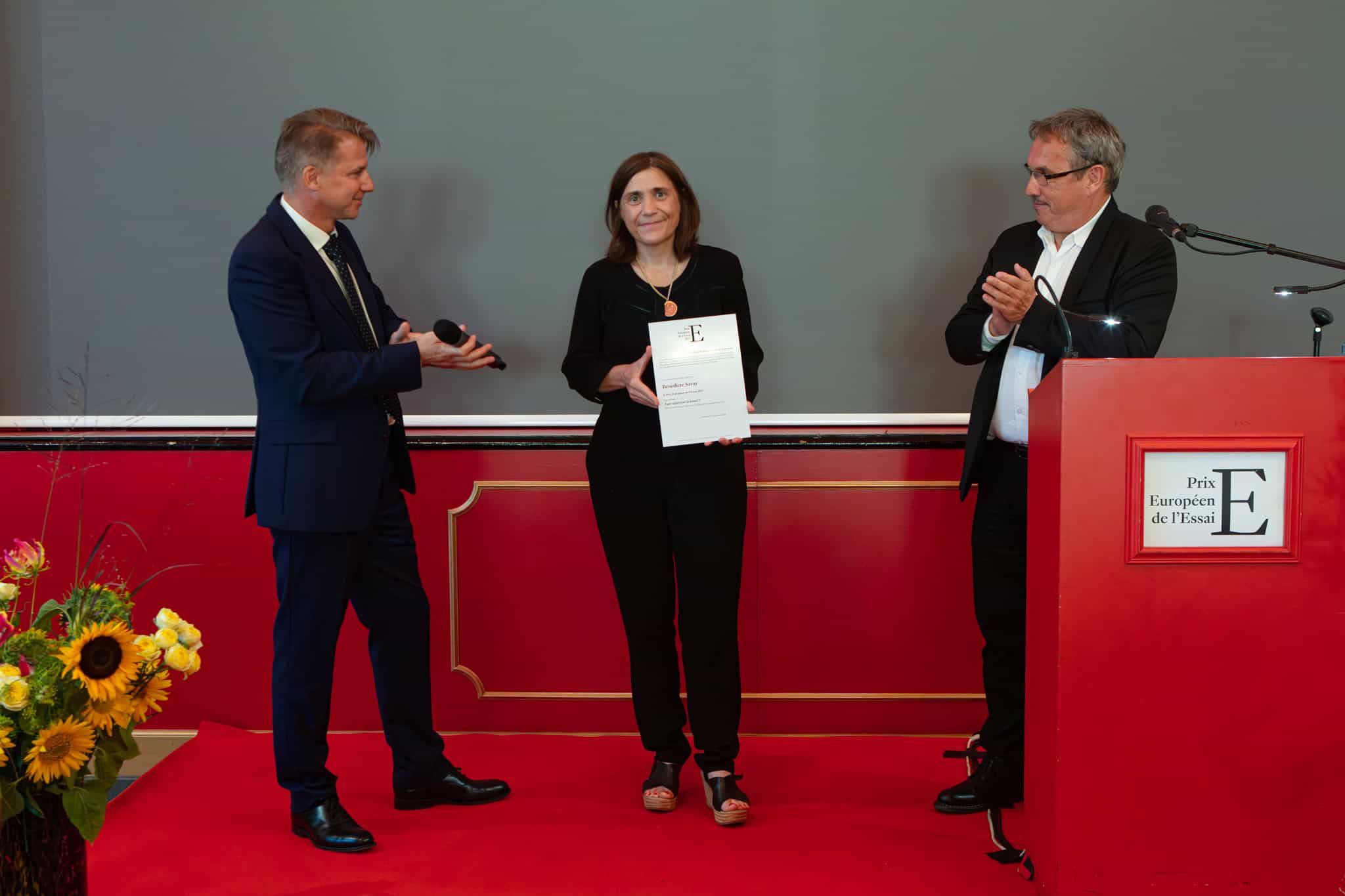
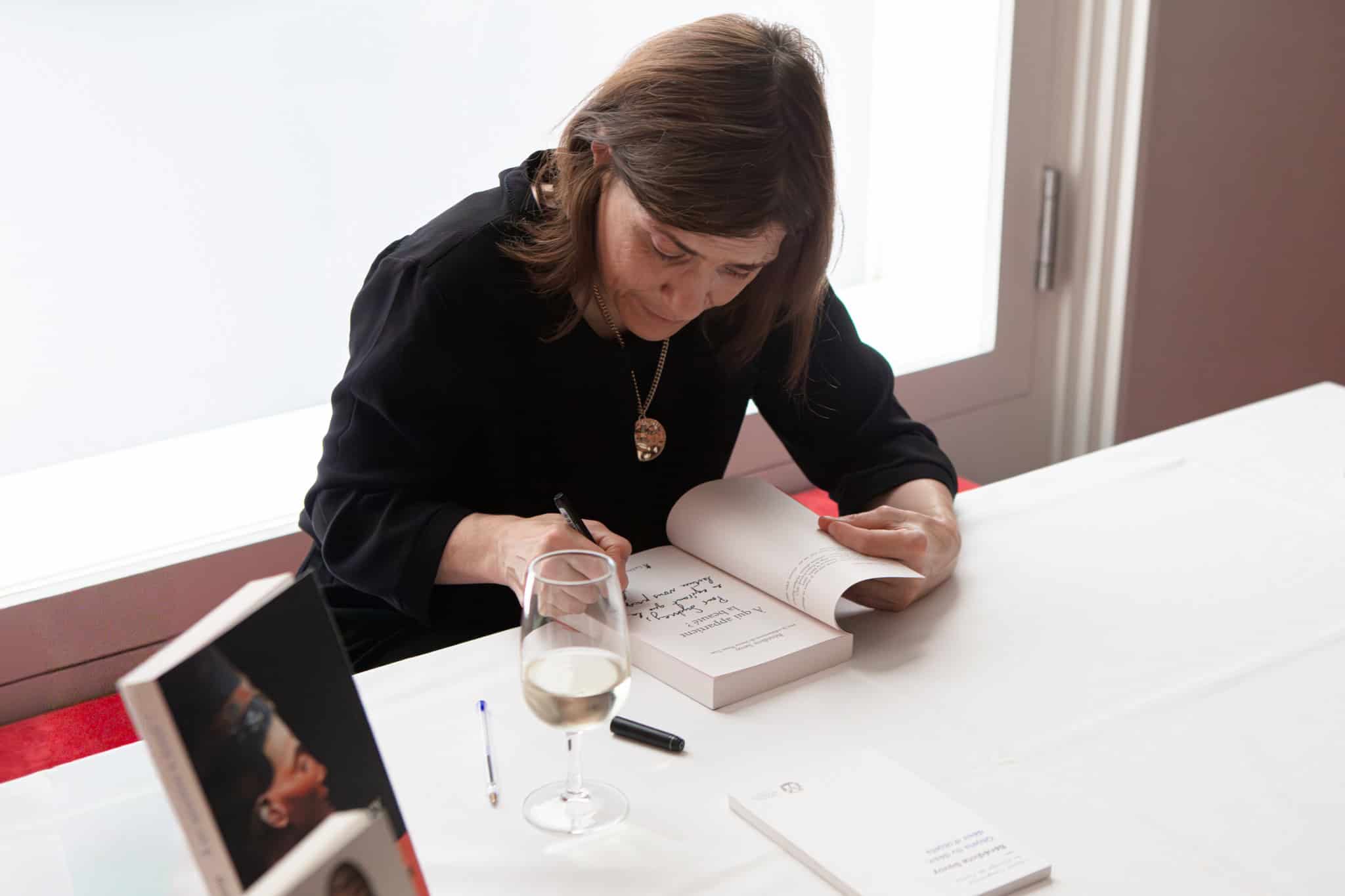
is awarded the 47th European Essay Prize for her book Who Owns Beauty? (Cambridge, Polity, 2025, in collaboration with Jeanne Pham Tran)
The jury of the European Essay Prize recognized in the work Who Owns Beauty? the complex art of highlighting all the issues related to the restitution of artworks. Insofar as the circulation of these objects maps a history of the world, this essay enables an engagement with both the world of art and the world of politics. The essayist thus offers essential material for questioning, putting into perspective, reflecting on, and discussing a topic that has become indispensable in today’s society. The jury wishes to honour both Bénédicte Savoy’s career as an art historian and her scientific commitment as a mediator in the field.
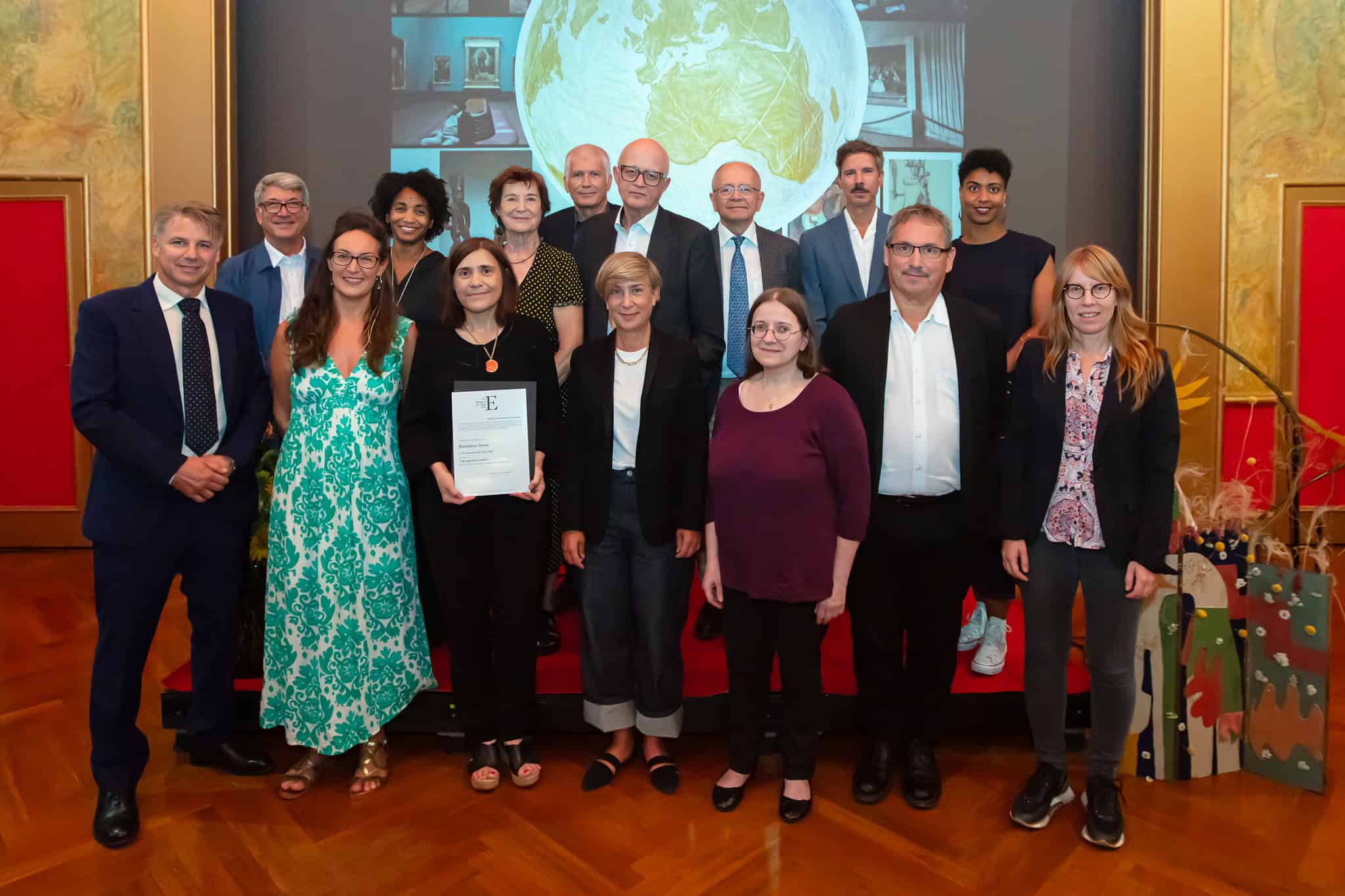
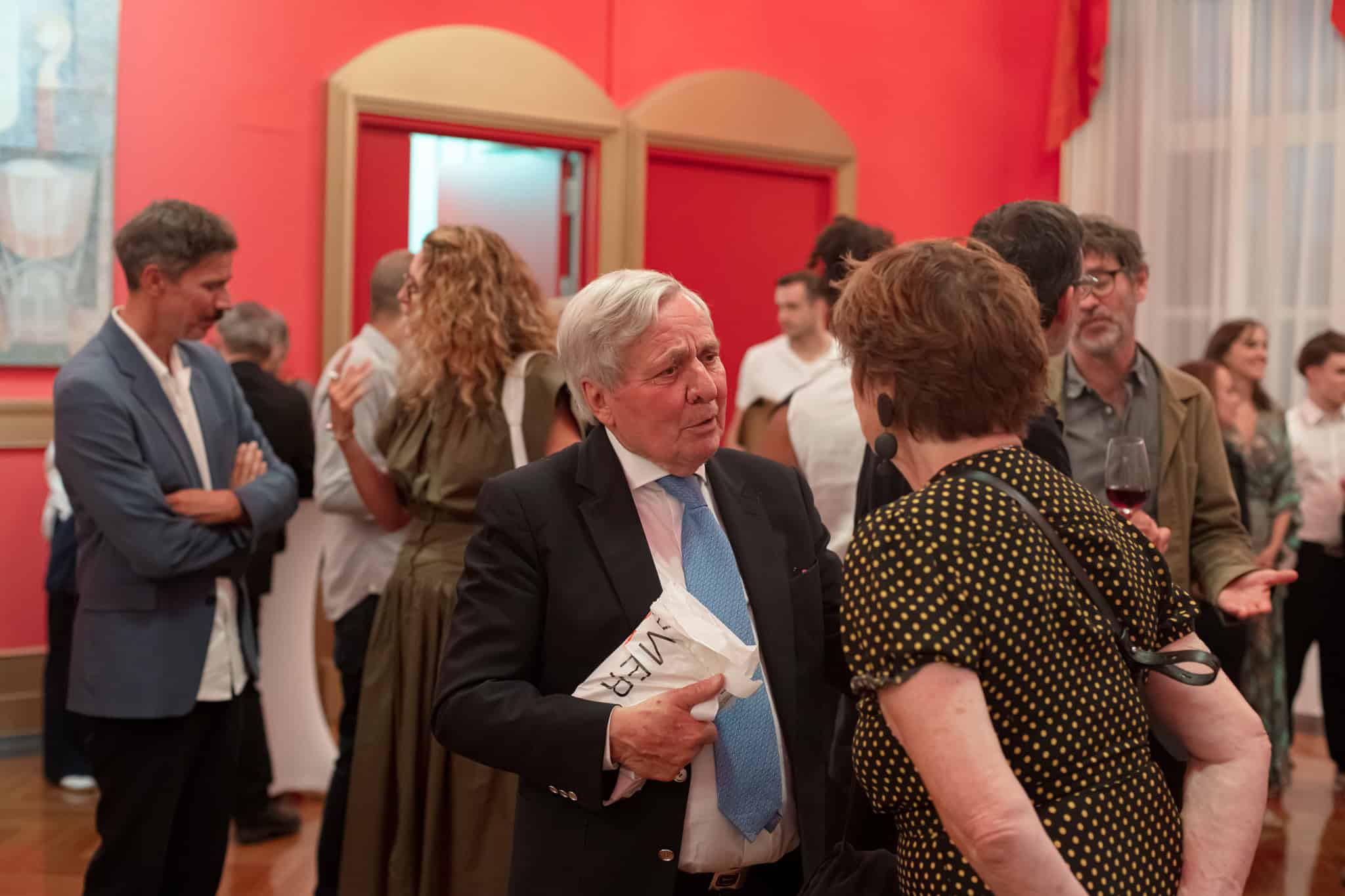
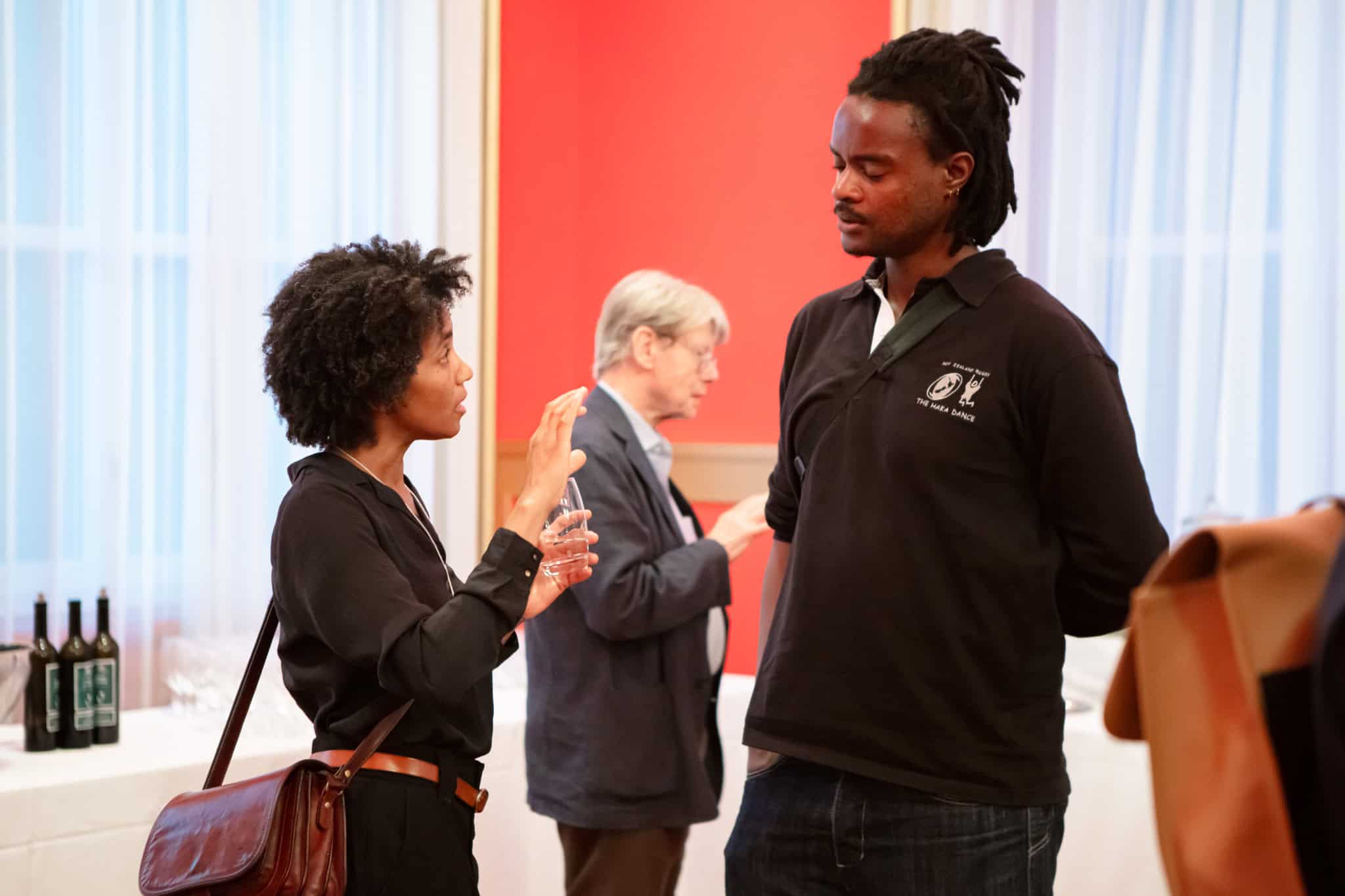
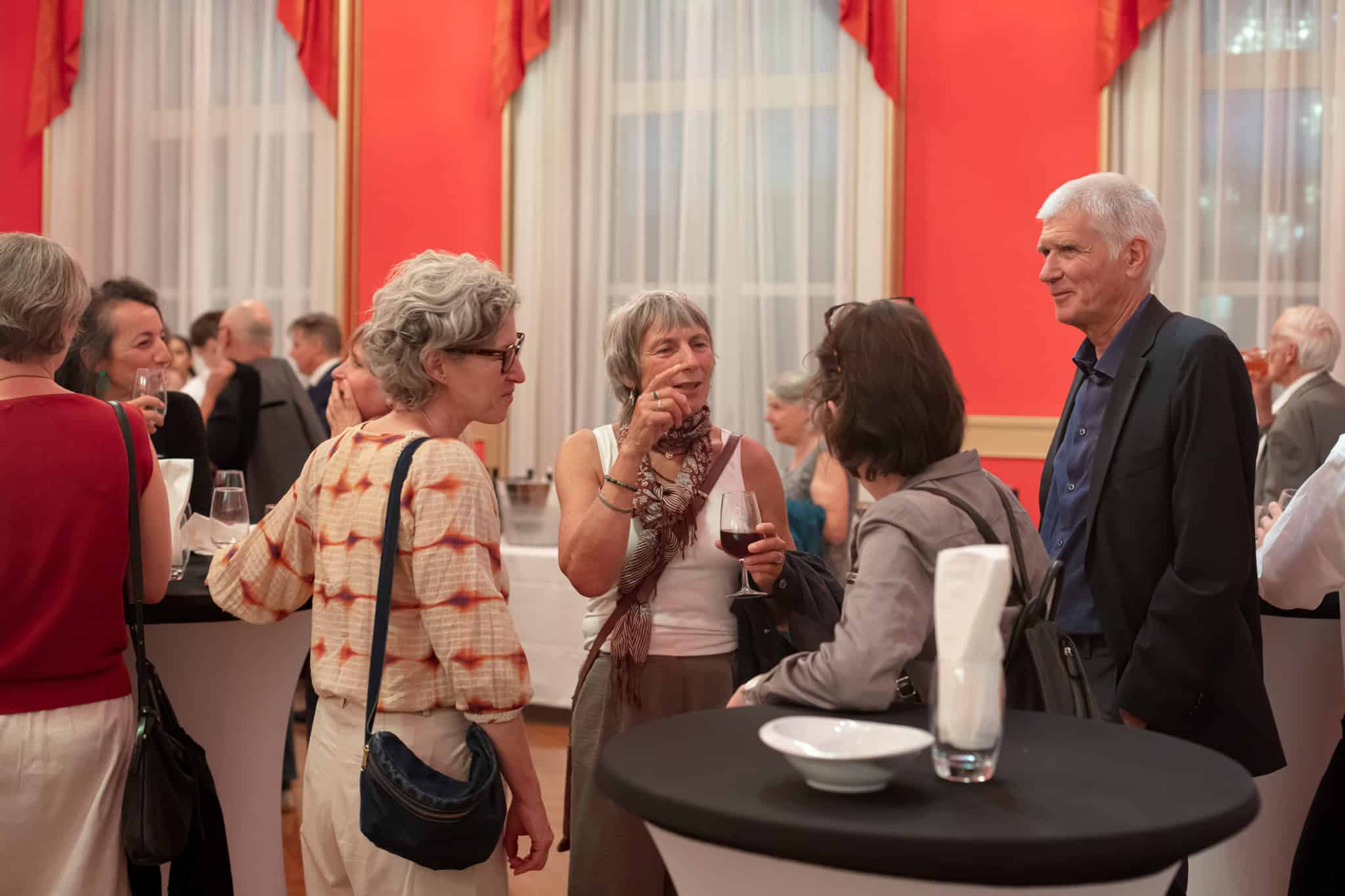
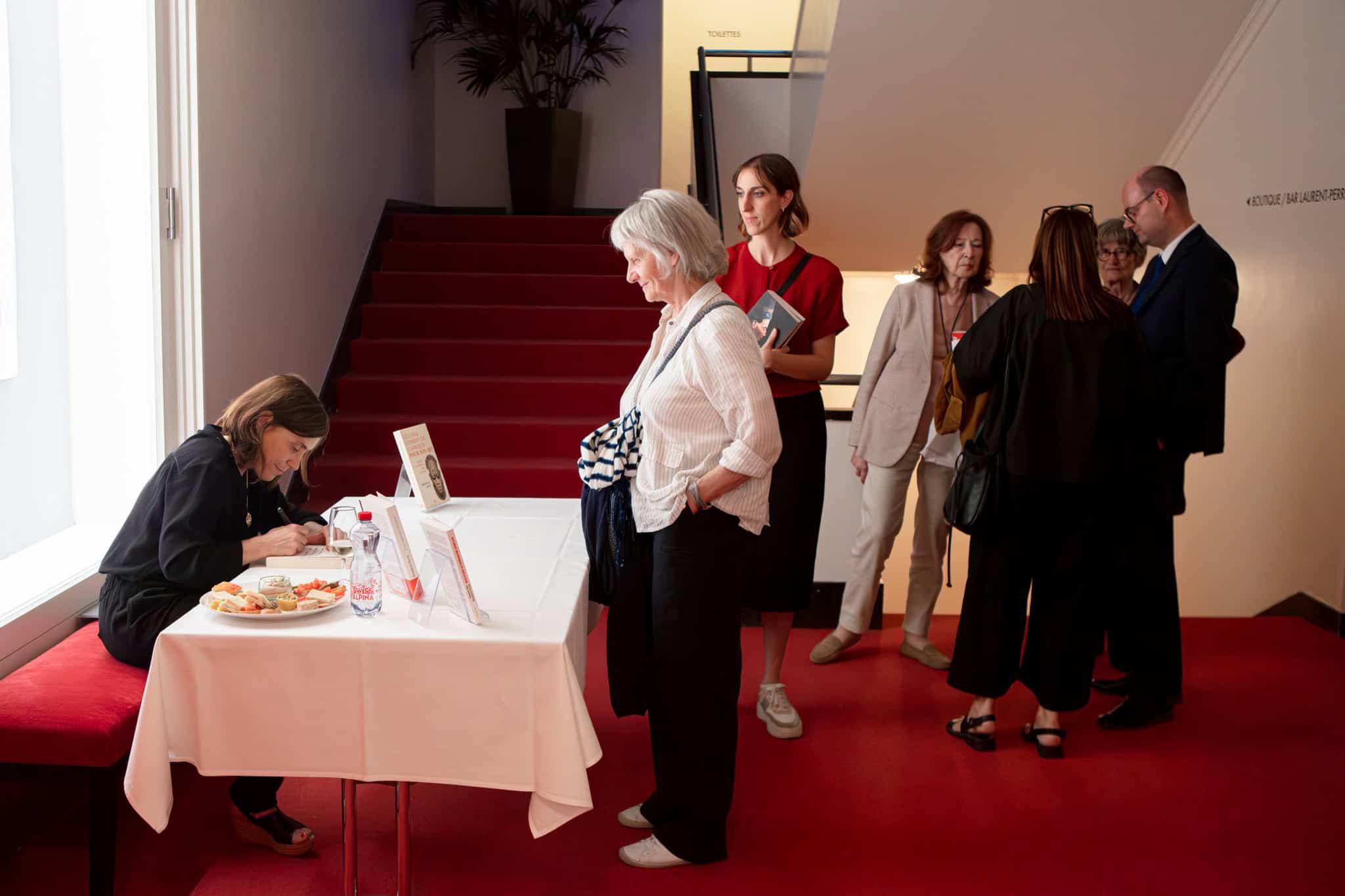
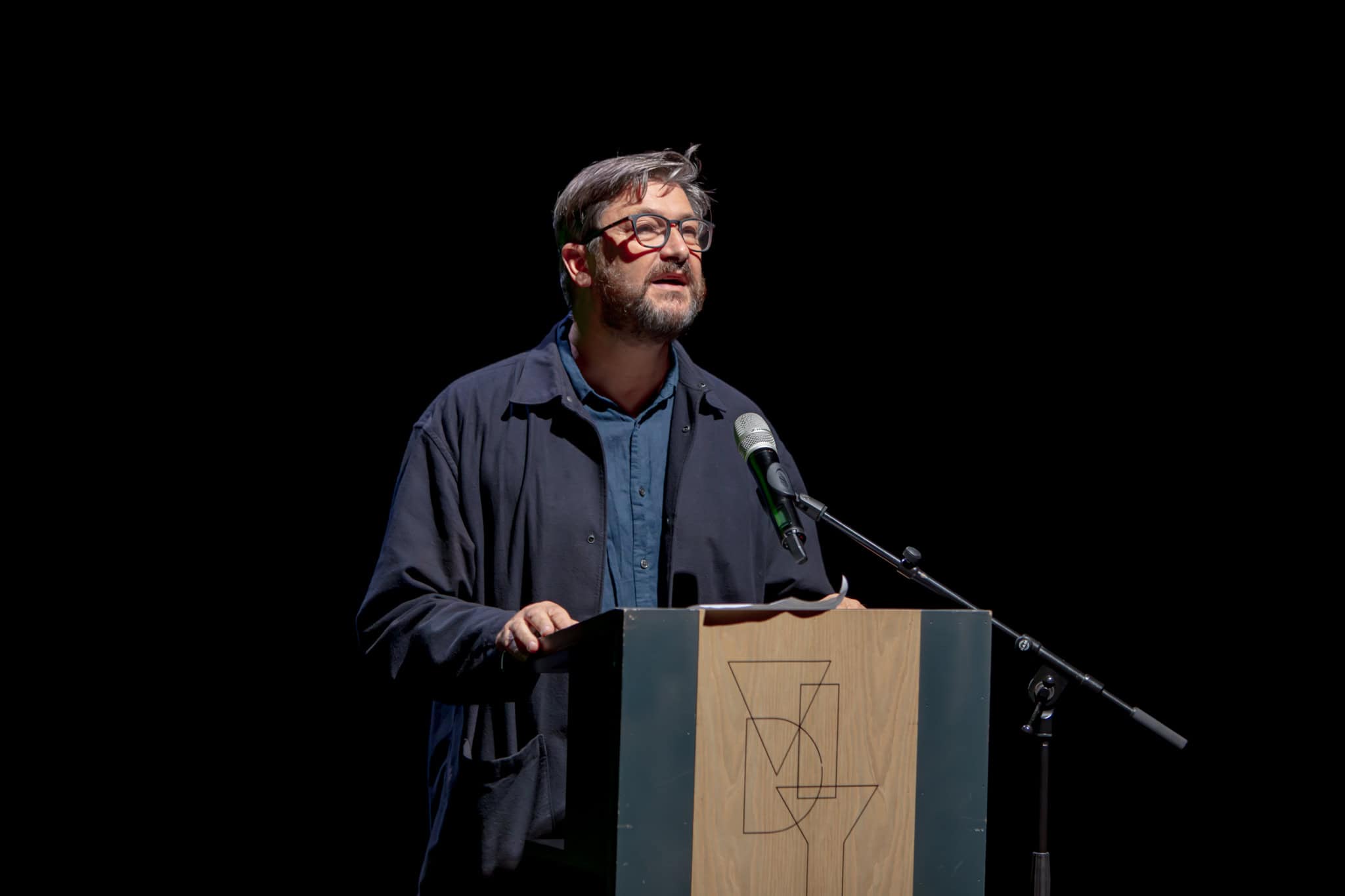
Award ceremony
Bénédicte Savoy
Lauréate du Prix Européen de l’Essai
—Laudatio
Emmanuel Laurentin
Journaliste et historien
—Motivations du jury
Michael Wirth
Membre du jury du Prix Européen de l’Essai
Cyril Veillon
Président du jury du Prix Européen de l’Essai et de la Fondation Charles Veillon
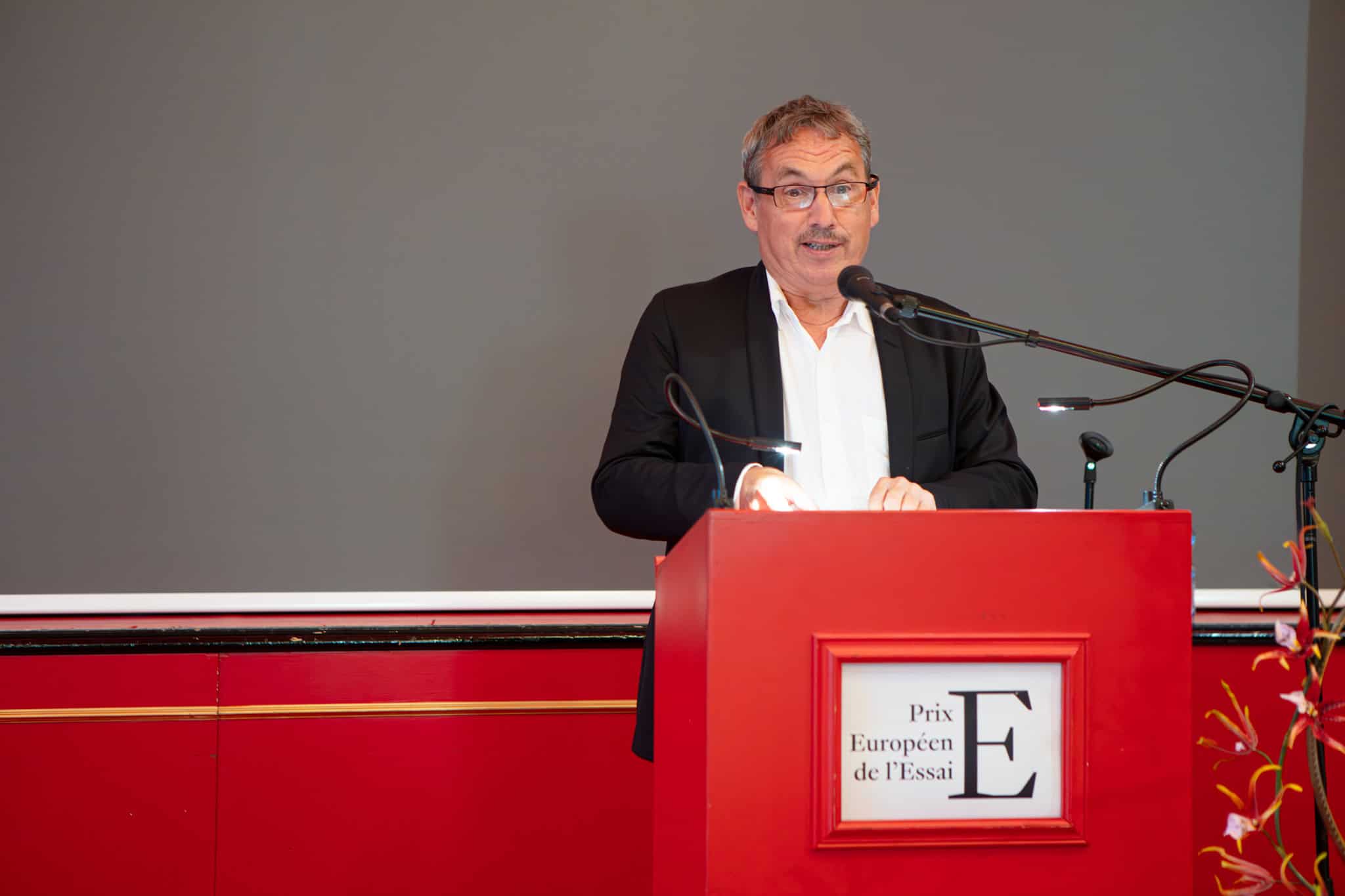
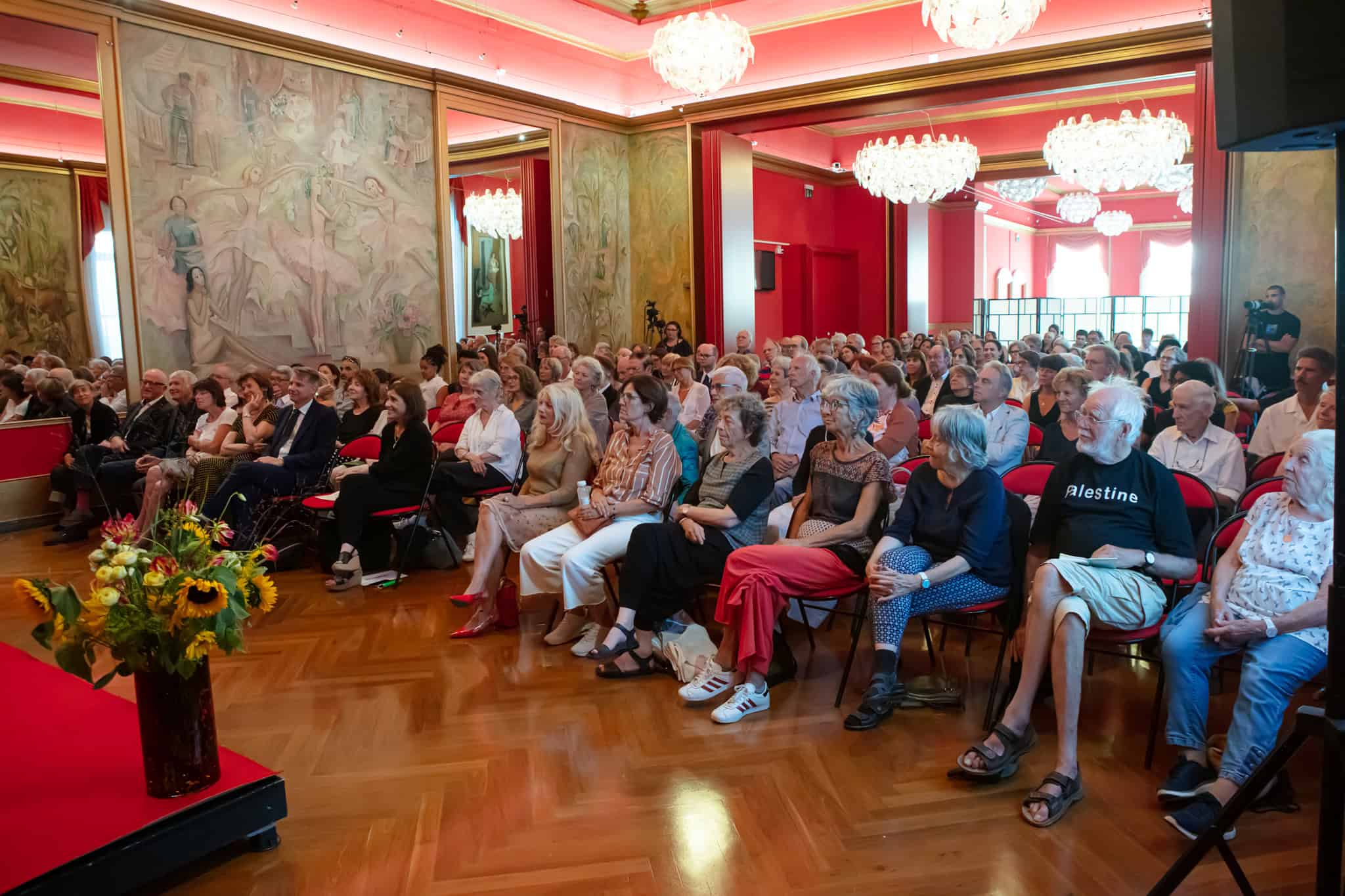
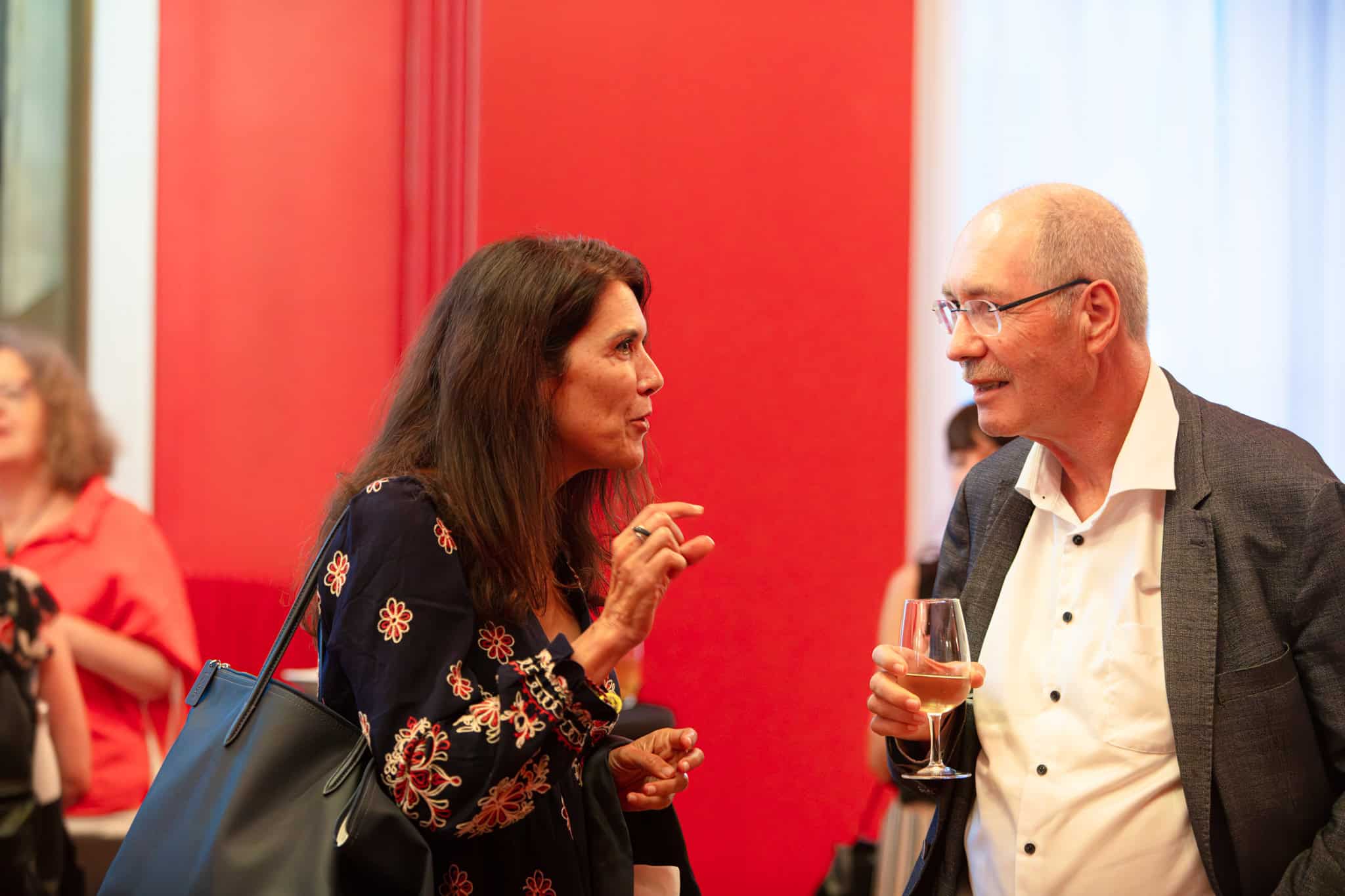
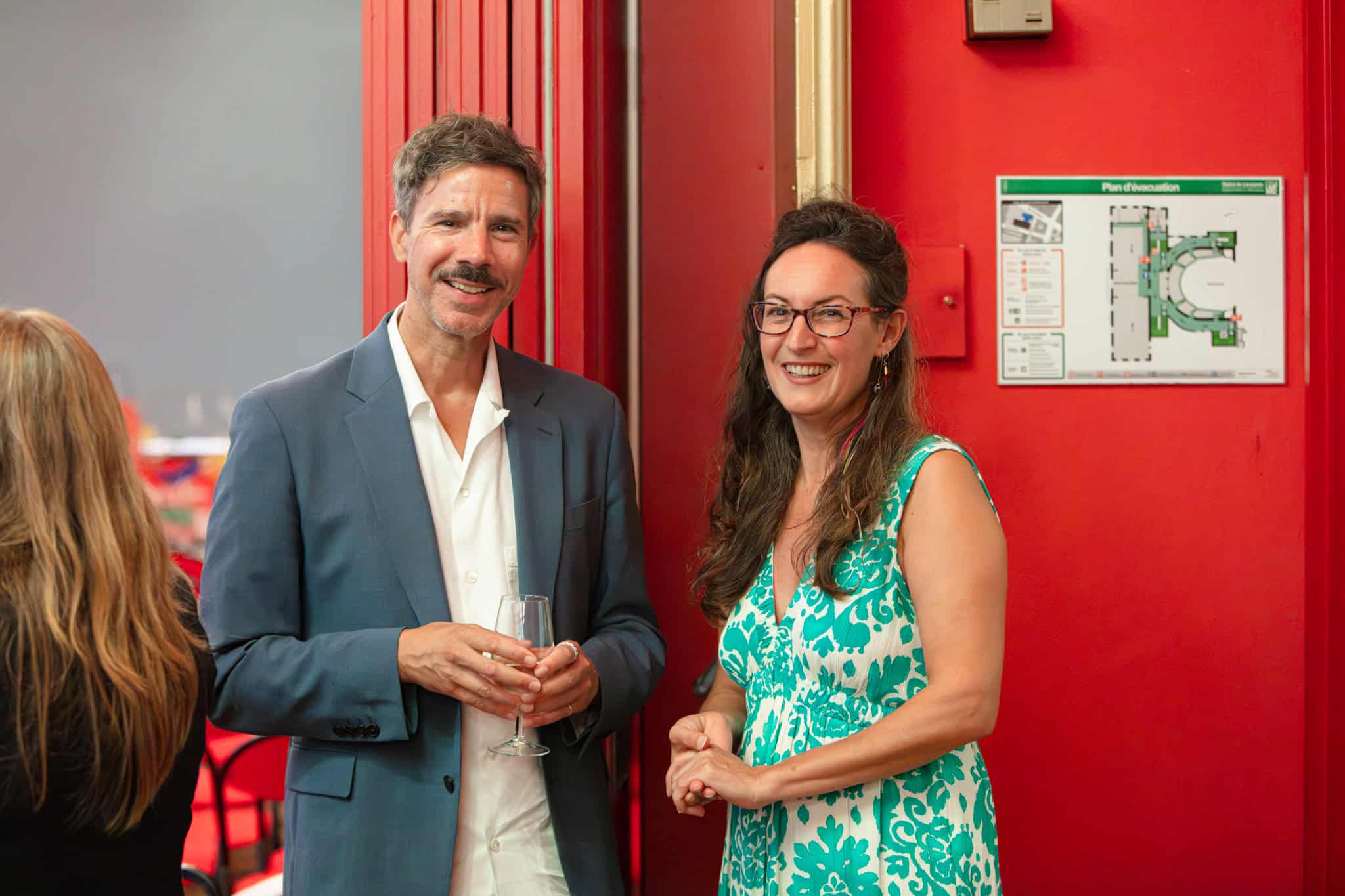
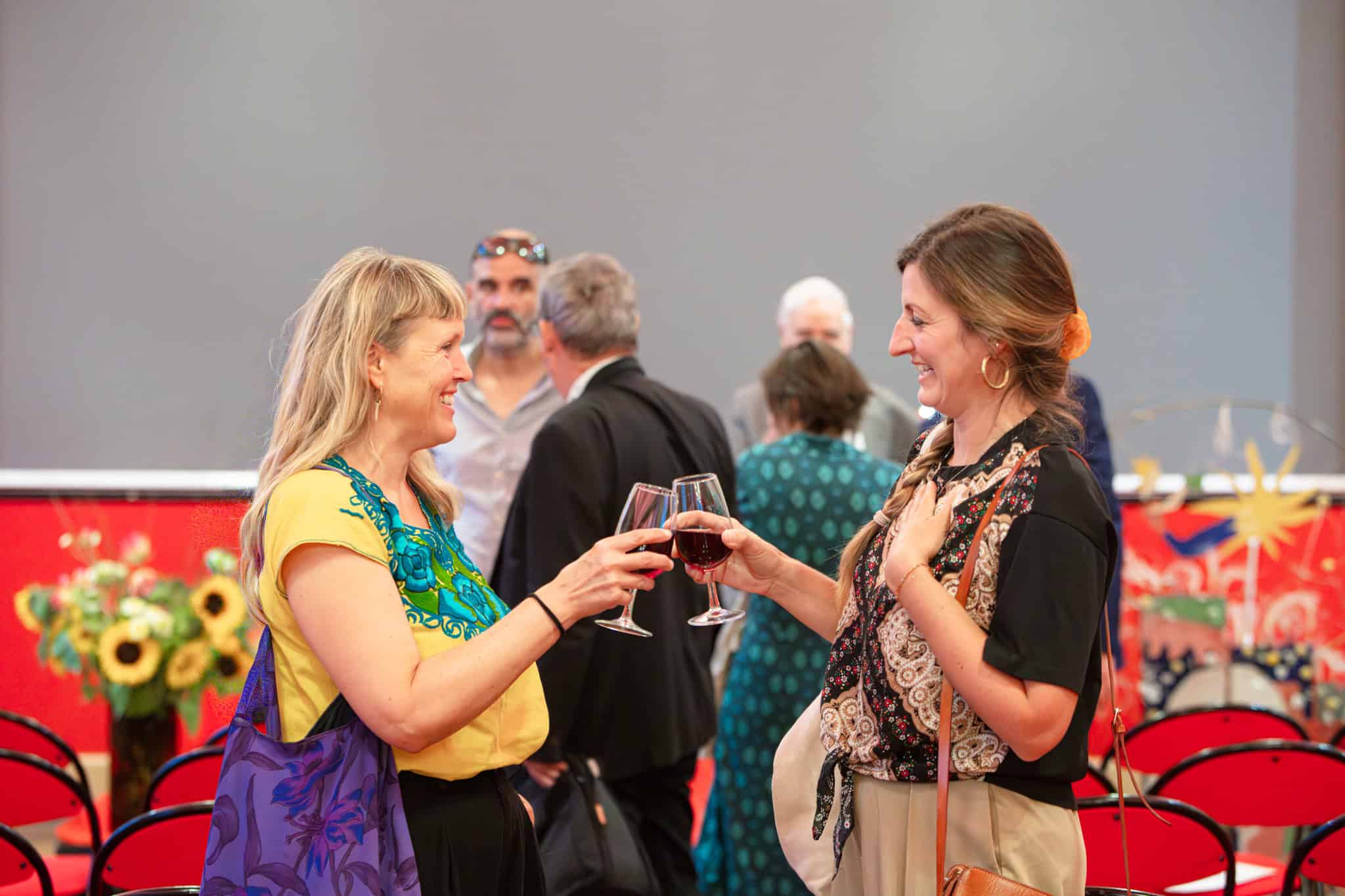
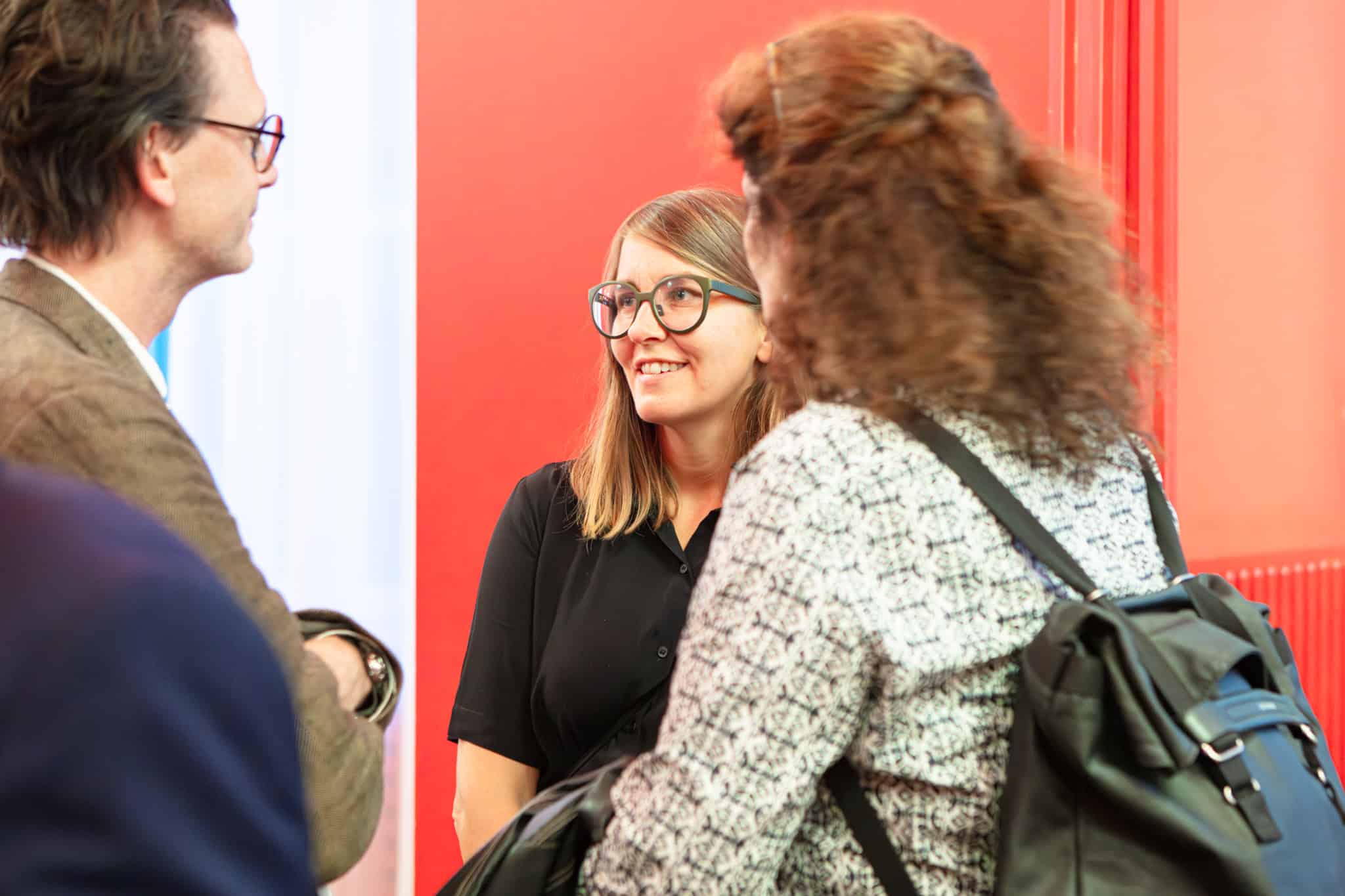
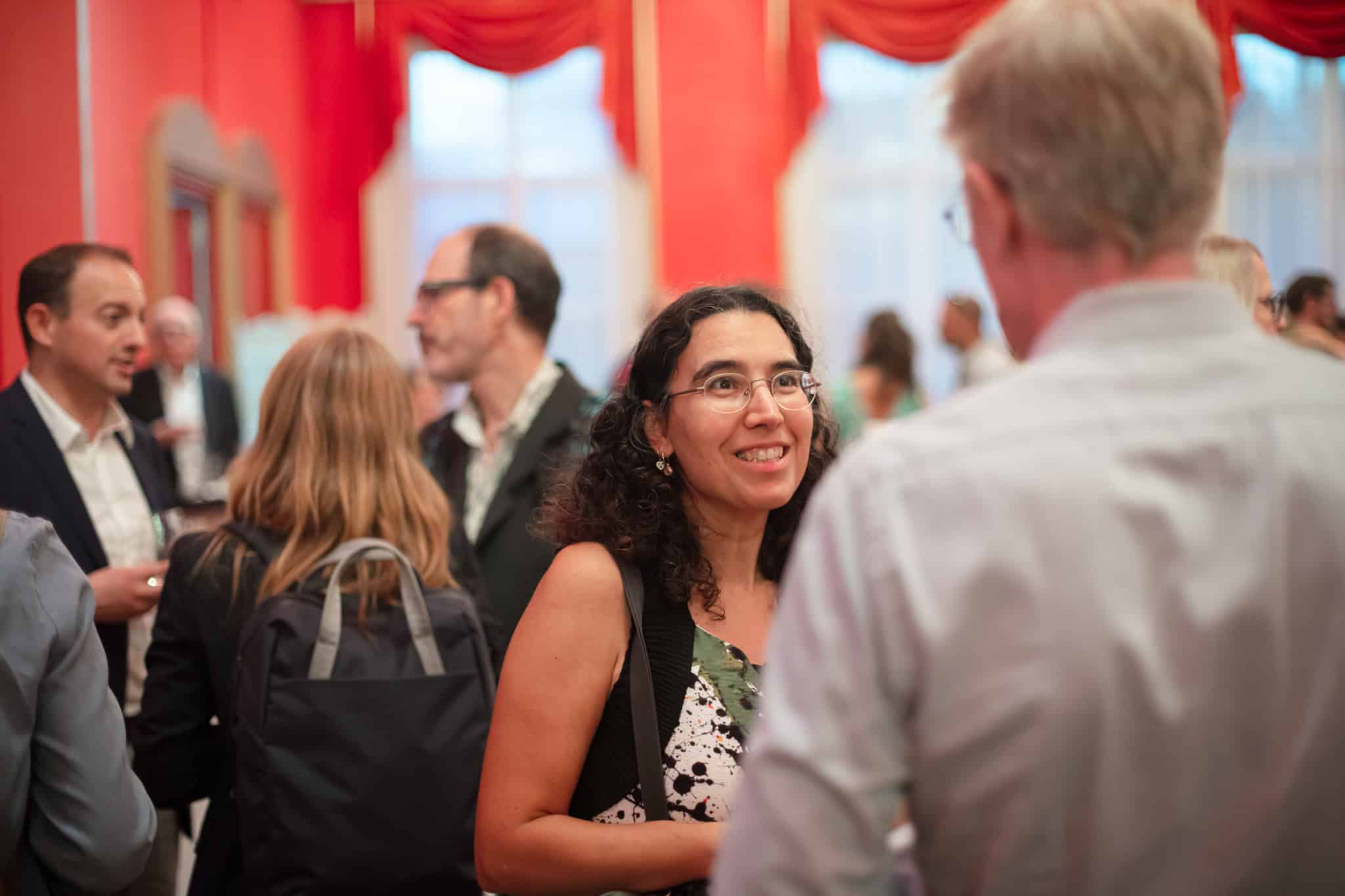
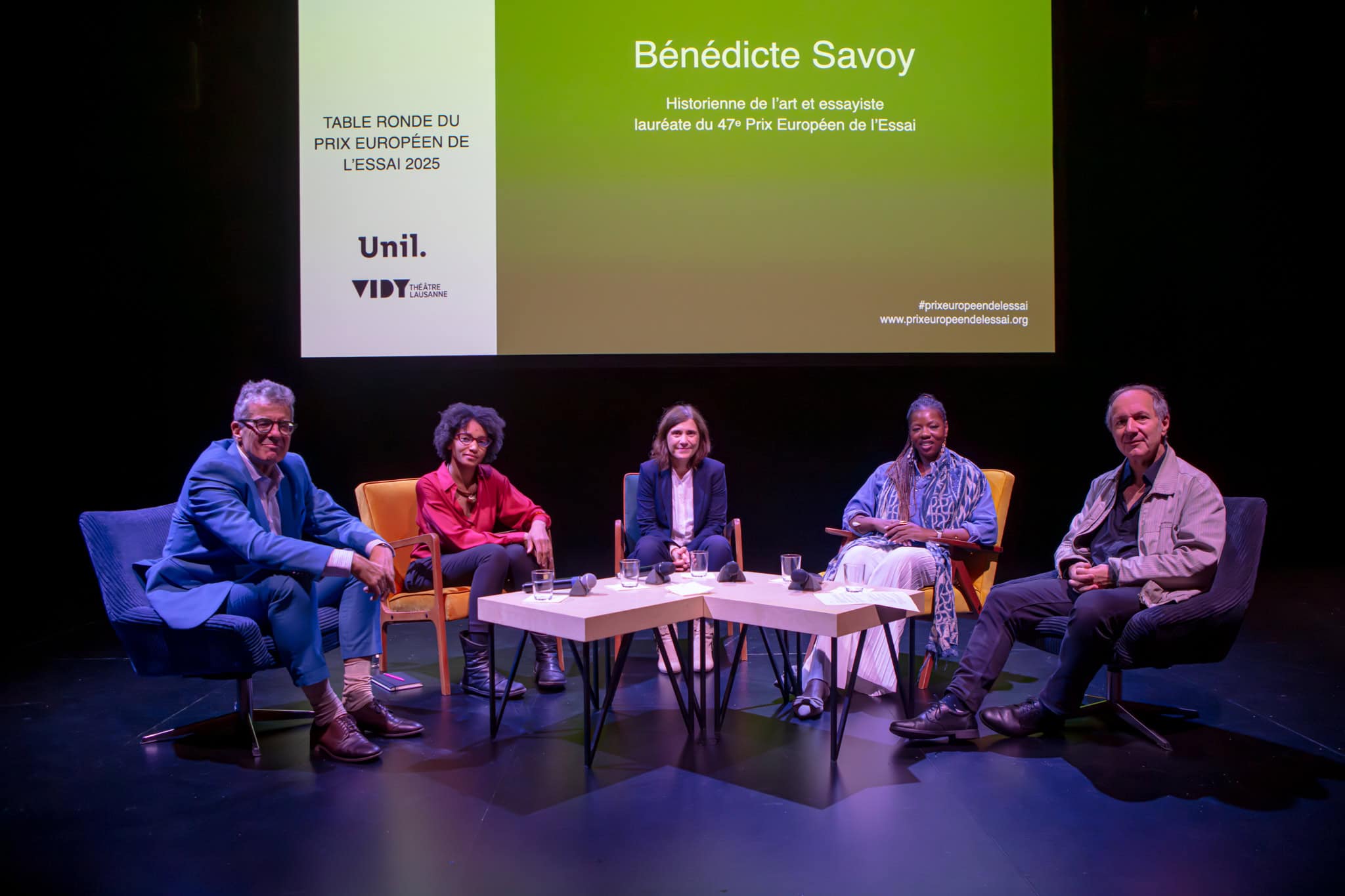
Discussion panel
Modération: Nicolas Bancel (historien, professeur ordinaire à la Faculté des sciences sociales et politiques de l’Université de Lausanne).
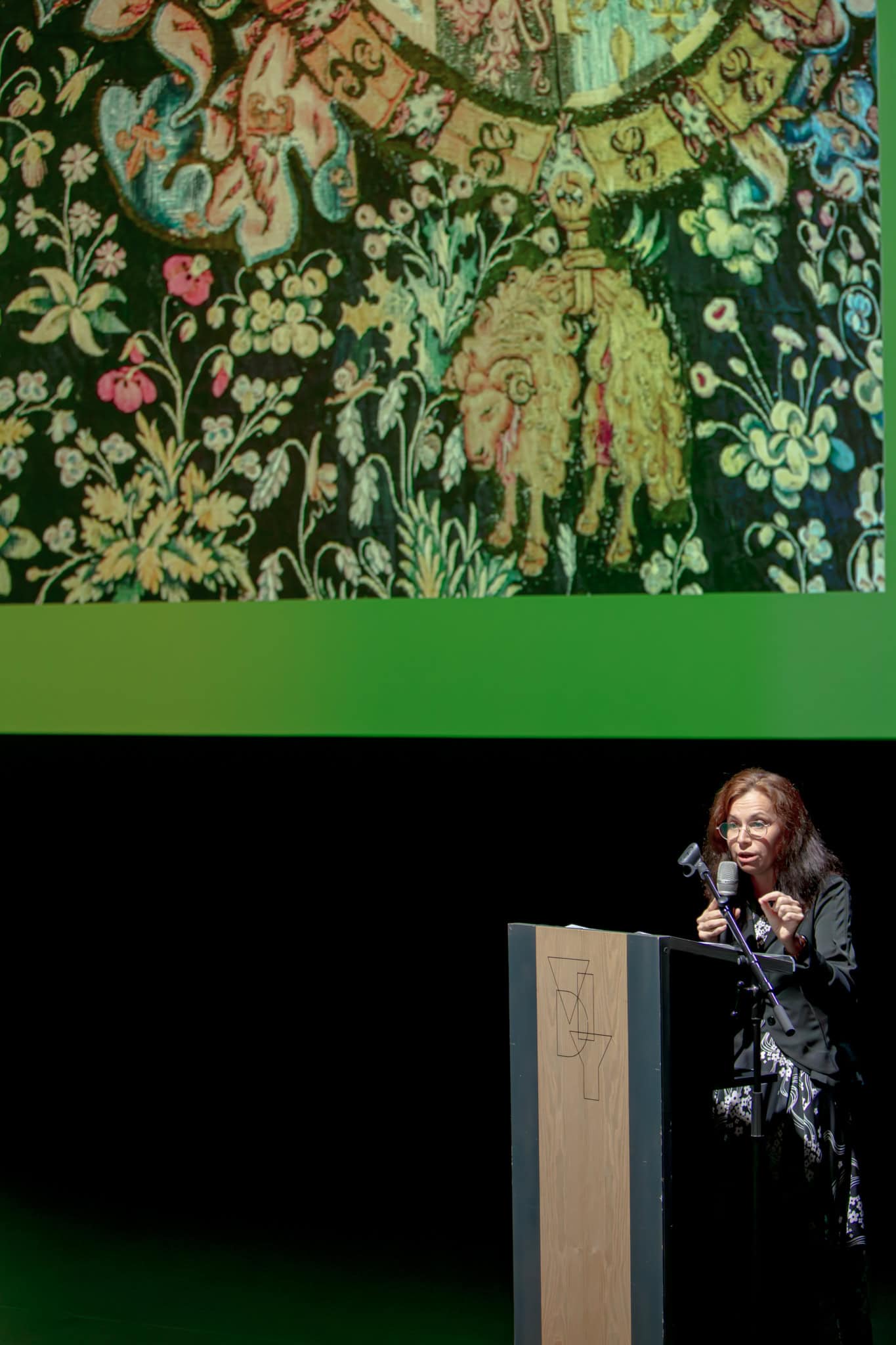
Introduction par Estelle Doudet, vice-rectrice de l’Université de Lausanne.
En partenariat avec l’Université de Lausanne et le Théâtre de Vidy.
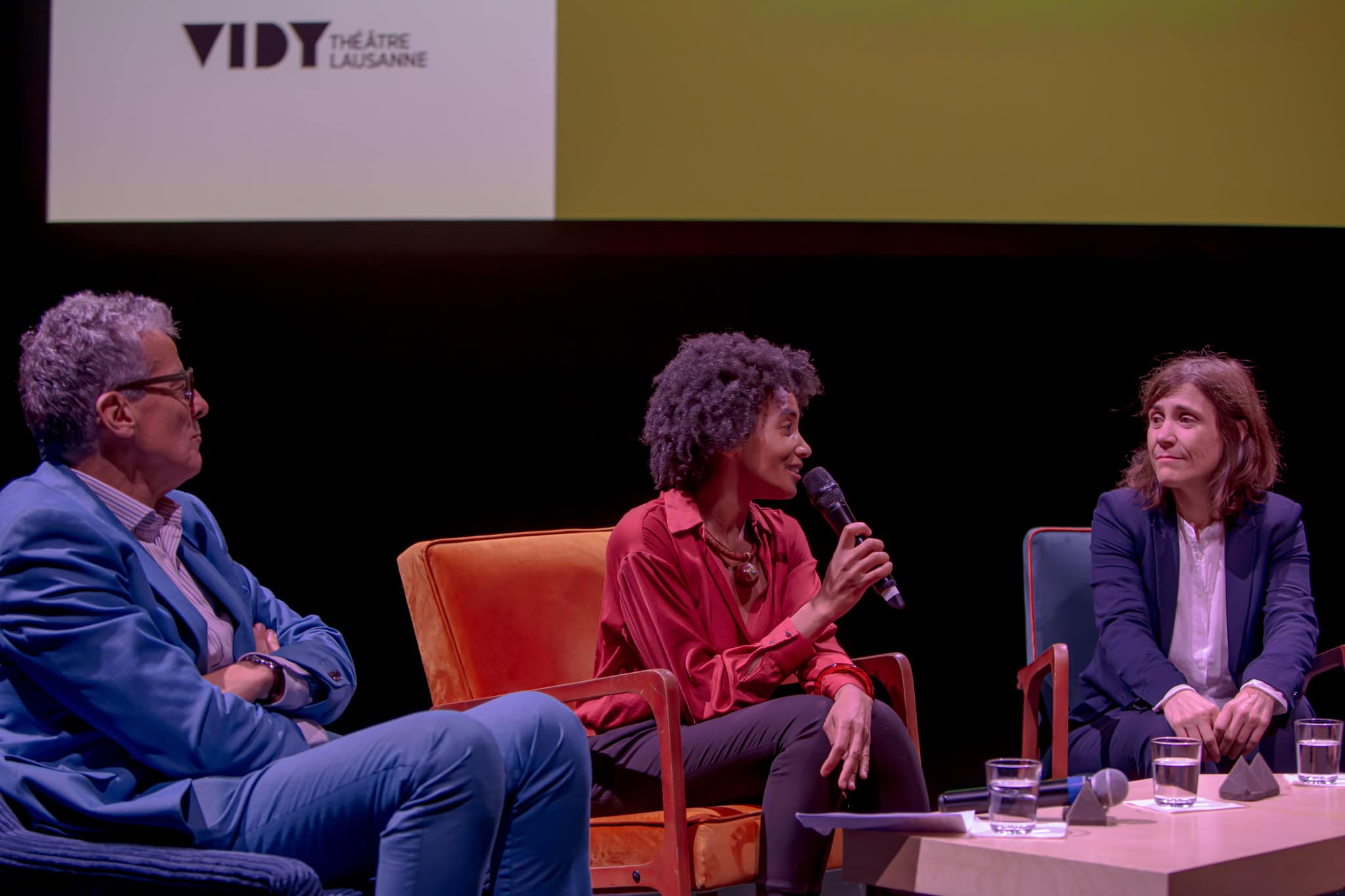
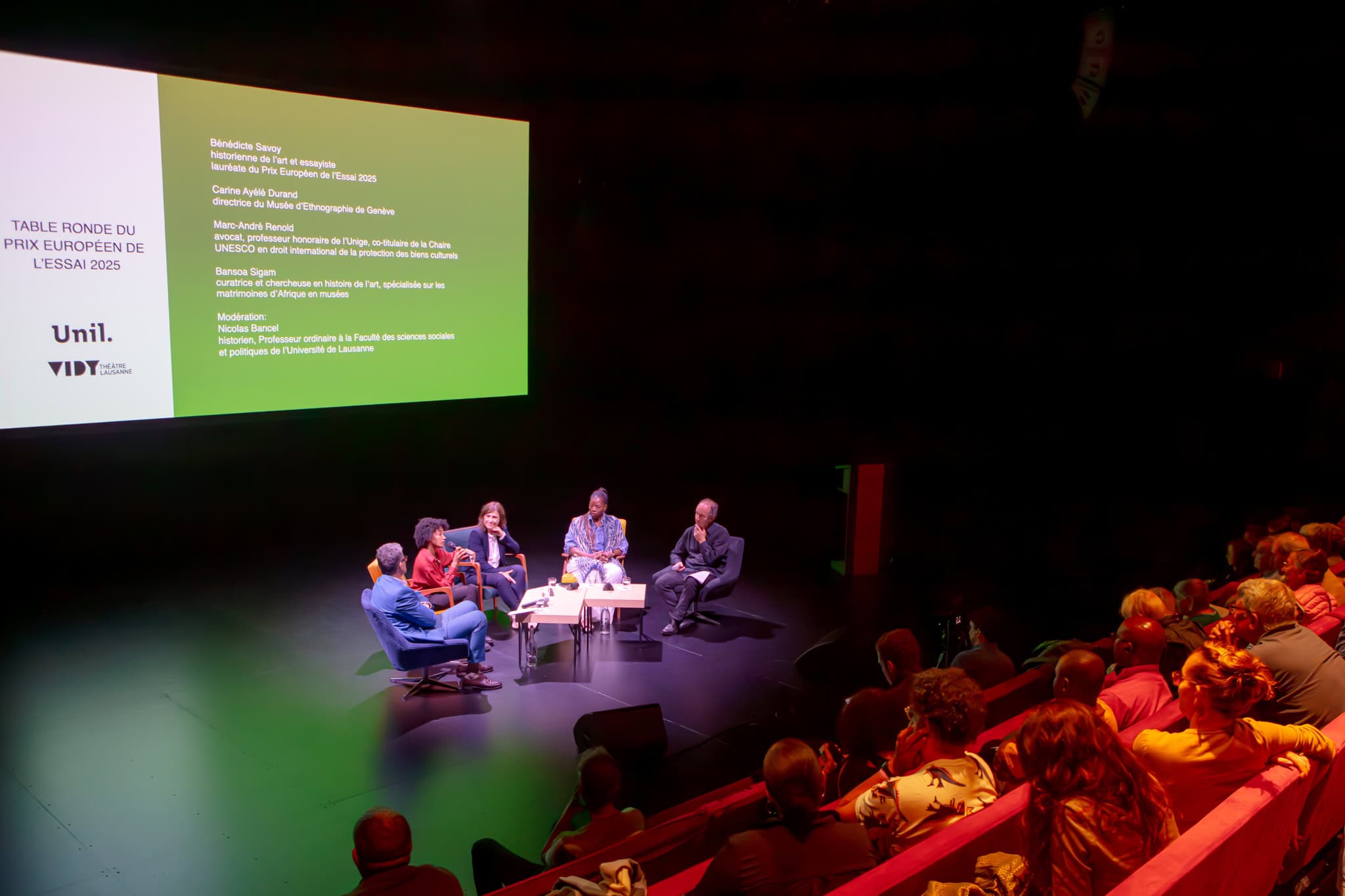
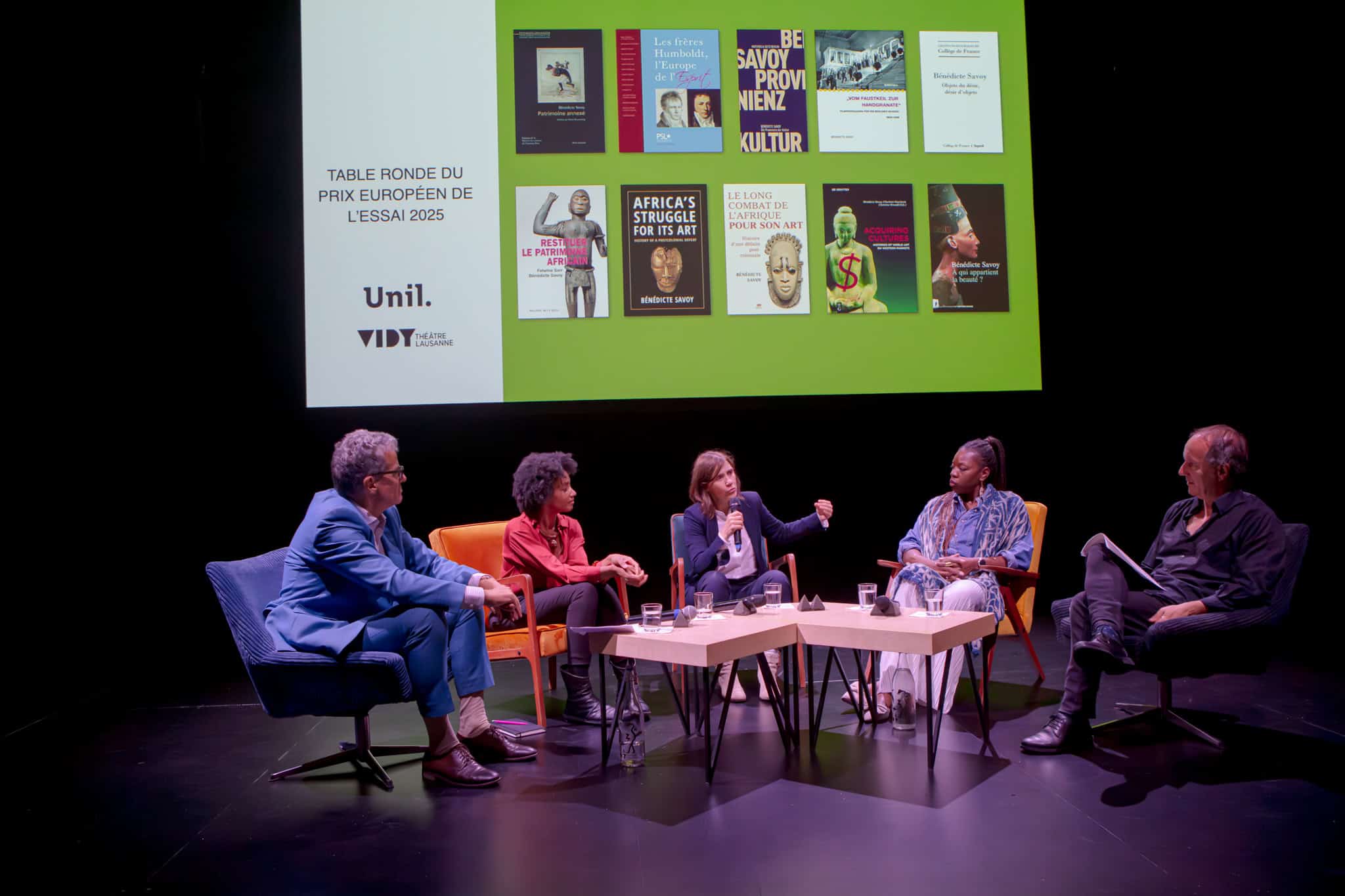
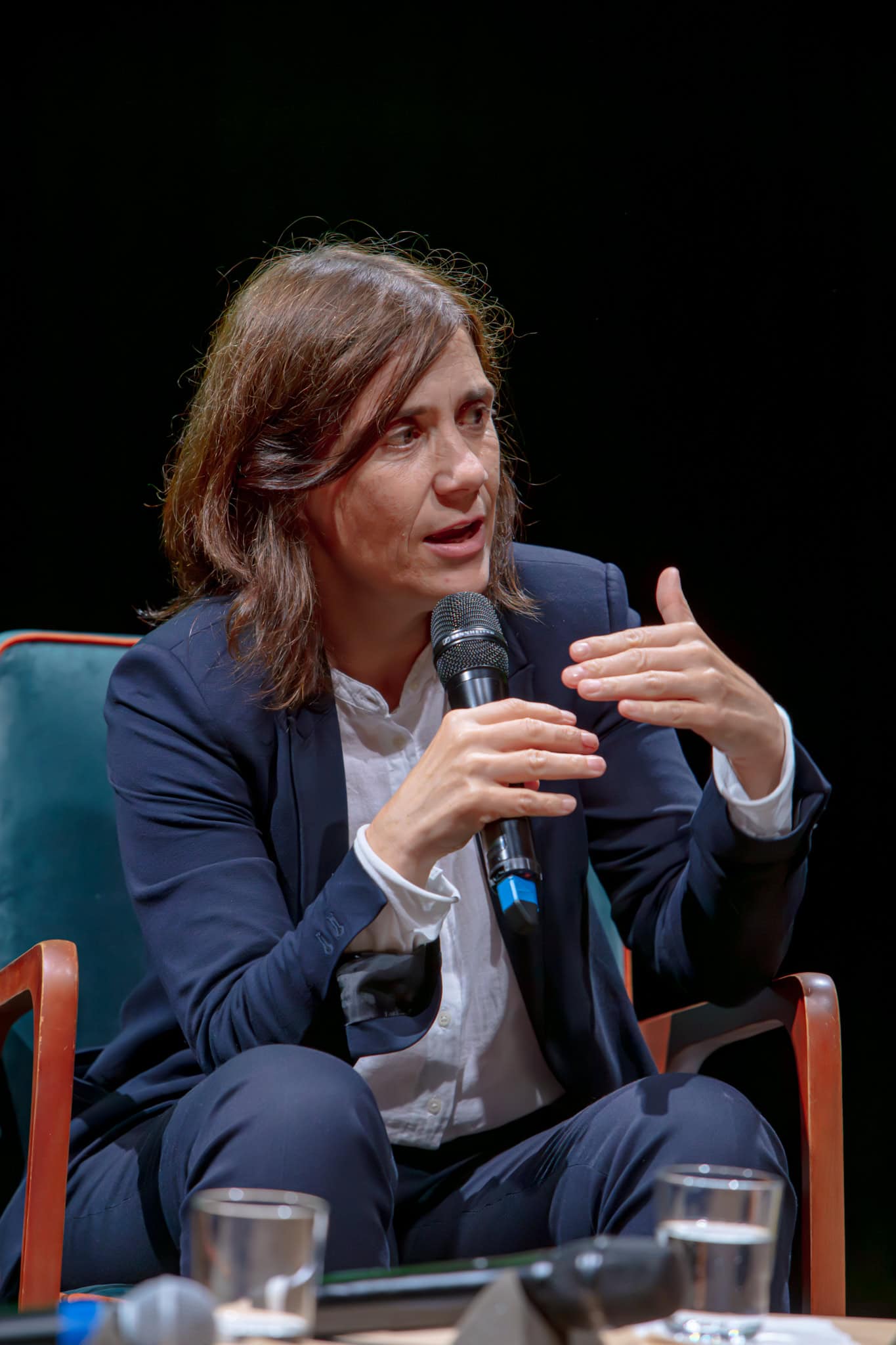
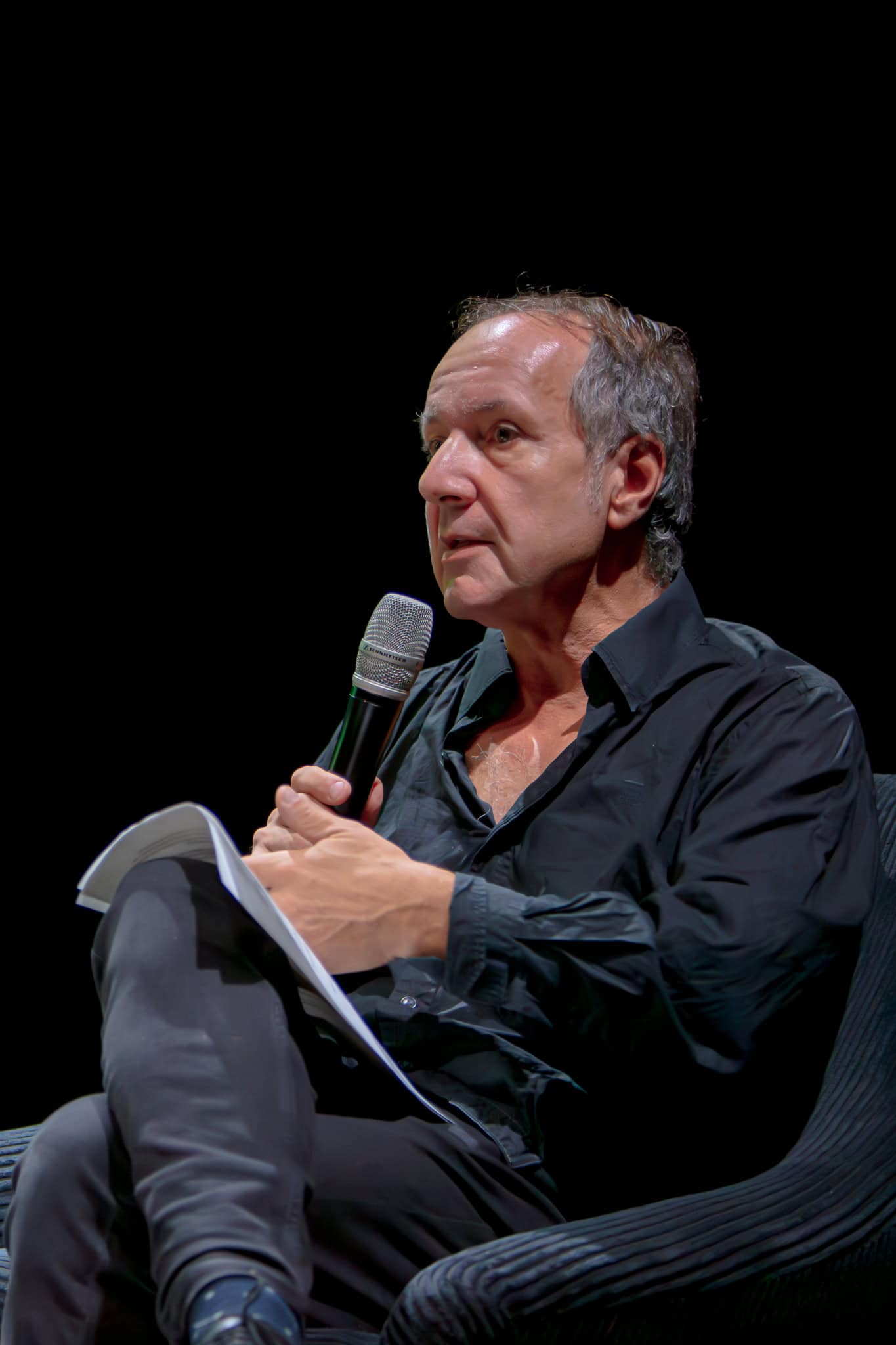
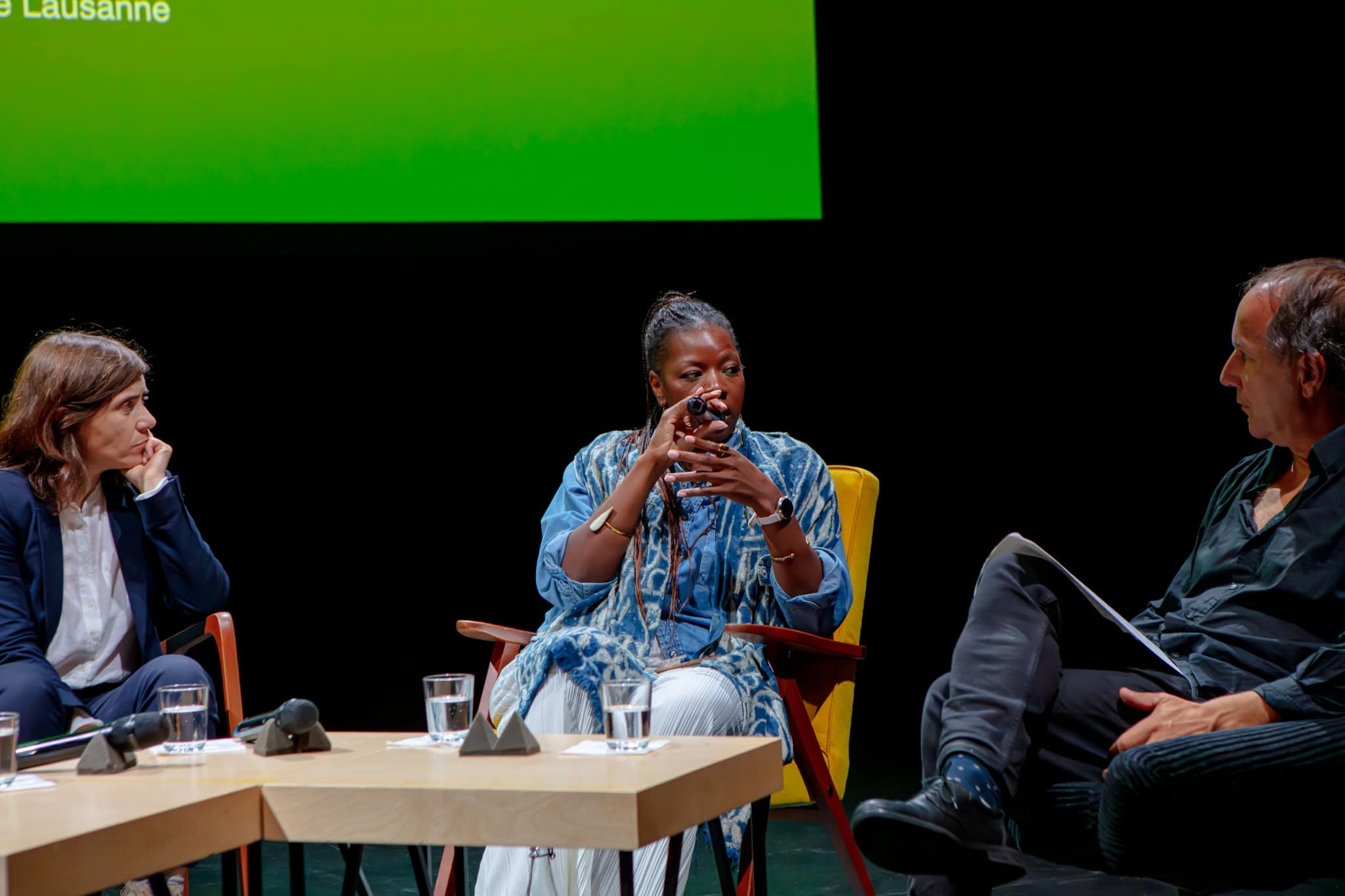
—Photos
© Sylvain Chabloz
4 Sept. 2025
Théâtre de Vidy Lausanne
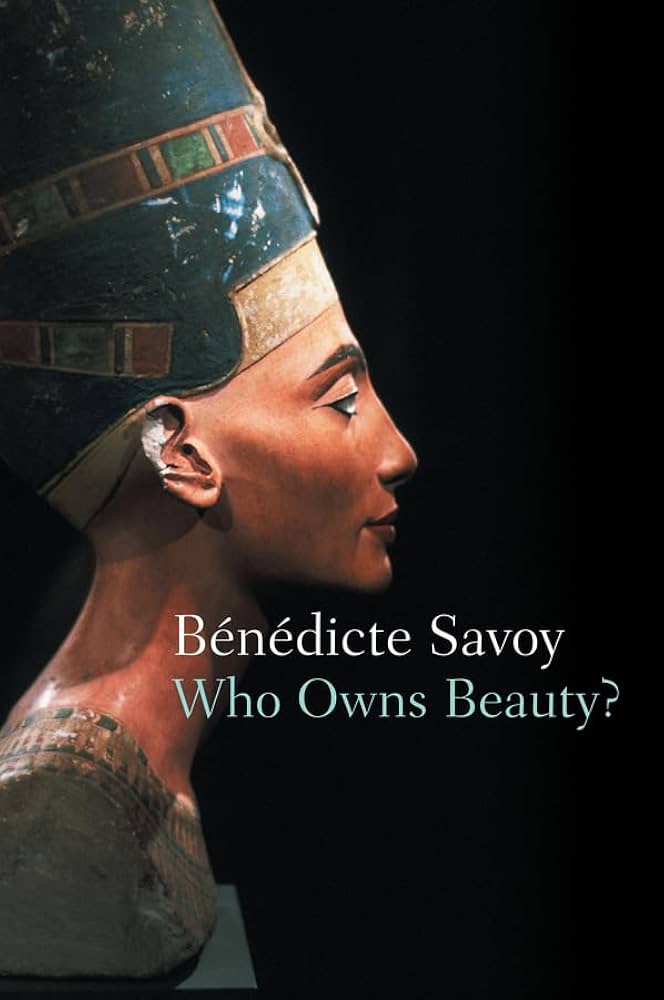
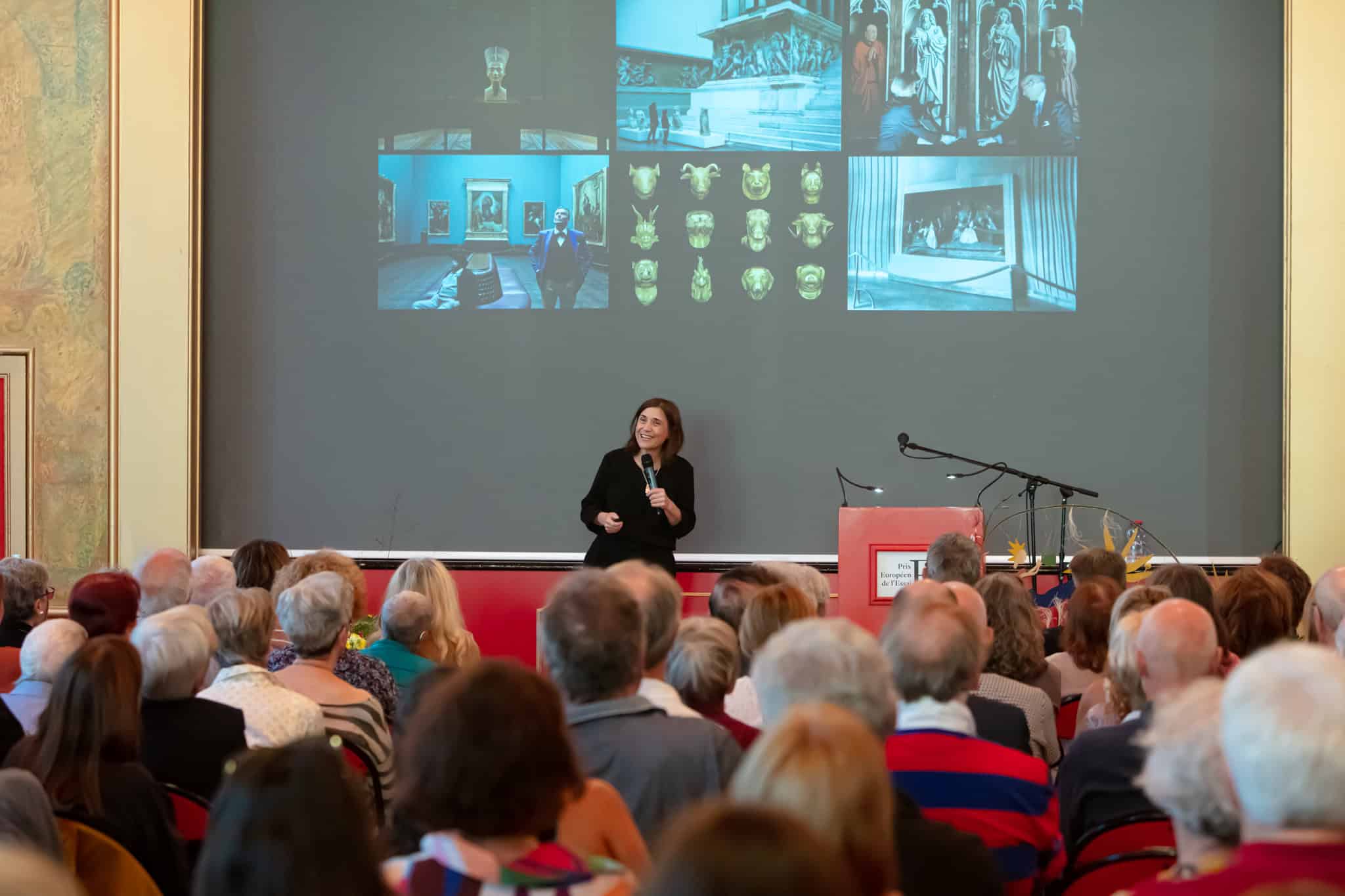
The bust of Nefertiti, the Great Pergamon Altar, the Adoration of the Mystic Lamb, the Sistine Madonna, the Old Summer Palace bronze heads, Watteau’s L’Enseigne de Gersaint, the Bangwa Queen, Klimt’s Portrait of Adele Bloch-Bauer, the Benin Bronzes: through the journeys of these iconic works, Bénédicte Savoy reflects on desire and domination, on rupture and restitution, and on the profound emotions evoked by beauty when it is laced with pain of historical loss.
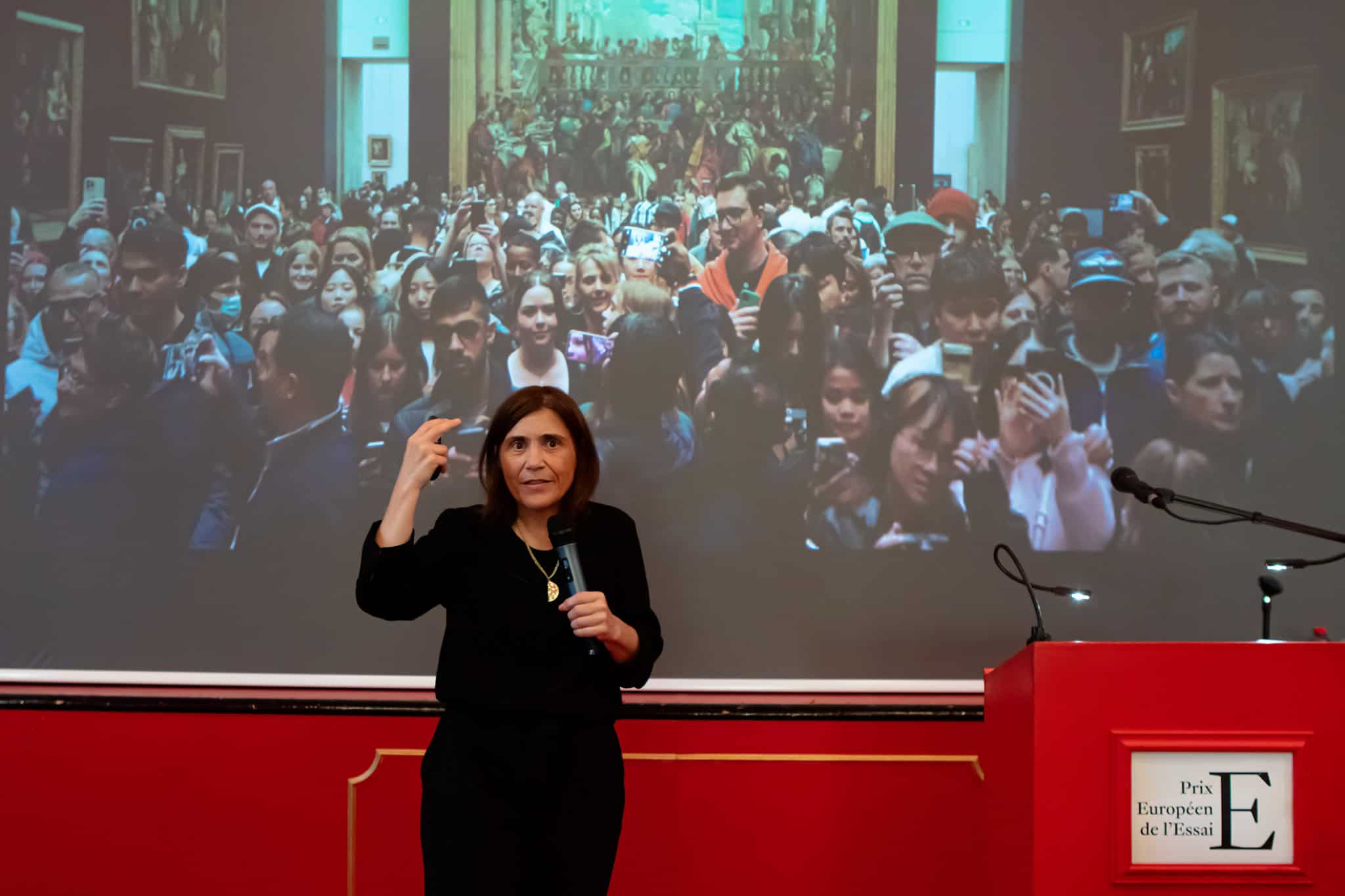
It is important to make the public aware of the contexts that have enabled European museums to become what they are today: the repositories of world art, of course, but also, and with equal importance, of the history and geopolitics of the 19th and 20th centuries. […]
Introspection is the effort that consists, collectively, in linking the objects kept in our museums to the history of their arrival here and to the people who live today where they were yesterday. It is a way of showing and thinking, of consciously embracing the cumbersome part of our history as Europeans, “to whom everything came”.
Bénédicte Savoy, À qui appartient la beauté ? Paris, La Découverte, 2024, p. 52 and 8